
Blog for client, River Town Dental
Now being used more often in dental practices, Laser Dentistry is otherwise known as “no-drill dentistry” or “no-pain dentistry” because it is a minimally invasive operation for cosmetic dentistry procedures. In dentistry, laser stands for ‘Light Amplification by the Stimulated Emission of Radiation’.

Getting a Beautiful Smile is Now Easier and Less Painful than Ever
Dental medical professionals use lasers with highly-focused light beams to reshape or remove tissue in small amounts. It is known to treat a wide range of dental conditions from tooth decay, to cavities, to overgrown gums, to gum disease, and more.
Laser surgeries are not limited to just dentistry, but many people don’t realize the cosmetic benefits it can have for your mouth. Dentists use lasers in many ways within your mouth, including to remove overgrown tissue, to reshape the gums, providing deep cleaning, or teeth whitening.
While there is a significant benefit to using lasers for other types of treatments, there are a number of great cosmetic dentistry benefits to using lasers.
Cosmetic Benefits to Laser Dentistry
- Comfortable treatment – Instead of using intimidating dental tools like drills, lasers help make cosmetic dentistry treatment more comfortable for everyone, especially for children.
- Teeth whitening – Likely the most popular and widely used application for lasers in cosmetic dentistry is teeth whitening. With dental lasers, you can enjoy a brighter and whiter smile quicker than with other dental methods.
- Gum reshaping – Laser dentistry can be used to reshape a beautiful smile that is covered up with too much gum. With lasers, dentists can painlessly reduce the amount of gum tissue covering your teeth, unveiling a more toothy smile.
- Lengthens crowns – Crowns need enough space on a tooth. Sometimes crowns require reshaping your gums to lengthen the amount of exposed tooth for the crown to be successfully placed in your mouth.
- Treats cold sores – Cold sores can be both painful and displeasing. Laser dentistry will help get rid of cold sores.
- Remove tissue folds – When wearing dentures, soft gum tissue folds can cause your dentures to not fit properly. To correct the fit and increase comfort, a dentist can use lasers to remove the tissue folds.
What to Expect During a Laser Dentistry Procedure
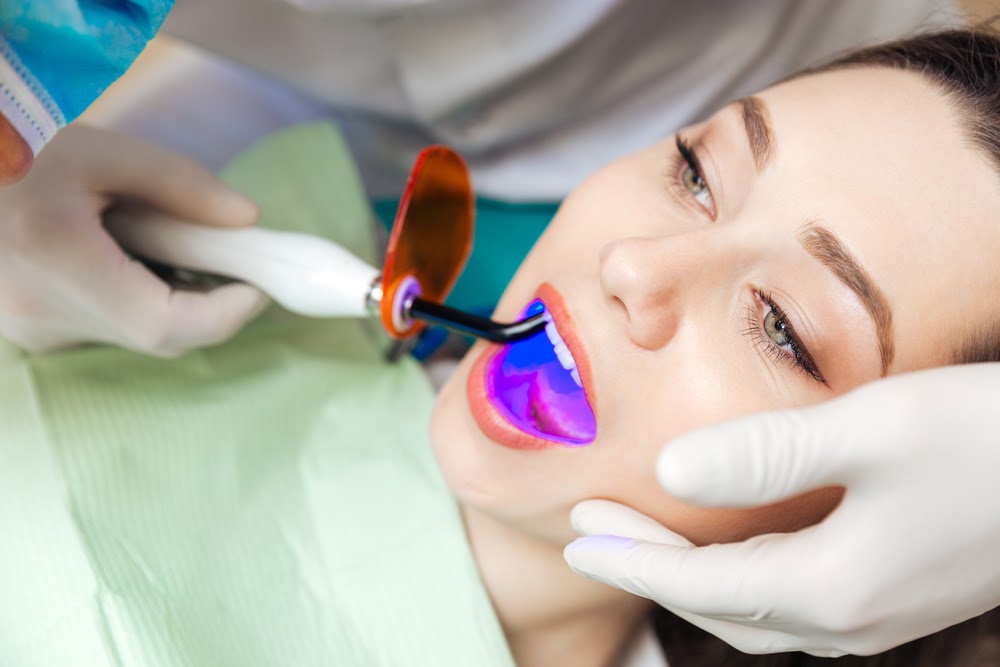
Like many other dental procedures, laser dentistry sometimes requires anesthesia but not as much as you may be used to receiving. Throughout the procedure, you will not experience any vibrations or pain like you might from a dental drill. Your mouth will be comfortably propped open and relaxed as the dentist moves the laser around your mouth.
The laser will sterilize your gums, making infection less likely and there is less damage to the gums which shortens the overall healing time. Patients lose less blood in a laser dentistry procedure than other traditional surgeries.
Types of Lasers Used in Dentistry
The two main types of lasers dentists use in laser dentistry are hard and soft tissue lasers. Both lasers use a different wavelength; each tissue absorbs different wavelengths of light, making it painless when cutting into mouth tissue.
- Hard Tissue Lasers – used primarily for teeth, the wavelength of hard tissue lasers can cut through bone. These lasers are very accurate and can remove small amounts of teeth for shaping or in preparation for other dental procedures.
- Soft Tissue Lasers – ideal for gum work, soft tissue lasers use a light wavelength that hemoglobin (found in blood) and water absorb easily. The healing process is faster with laser dentistry because of its ability to cleanly cut into soft tissue. Soft tissue lasers are perfect for cosmetic dentistry procedures because you see the results right away.
Laser dentistry is a convenient and nearly painless solution to many dental problems, whether they are serious or more cosmetic.


Leave a Reply